The OFAC SDN list is a public list of people, companies, groups, vessels and aircraft whose assets are blocked by the US government. Its full name is the Specially Designated Nationals and Blocked Persons List. US persons are generally prohibited from dealing with anyone on it. If you pay a vendor or take money from a customer who is on the list, that payment can be a sanctions violation.
What the SDN list is
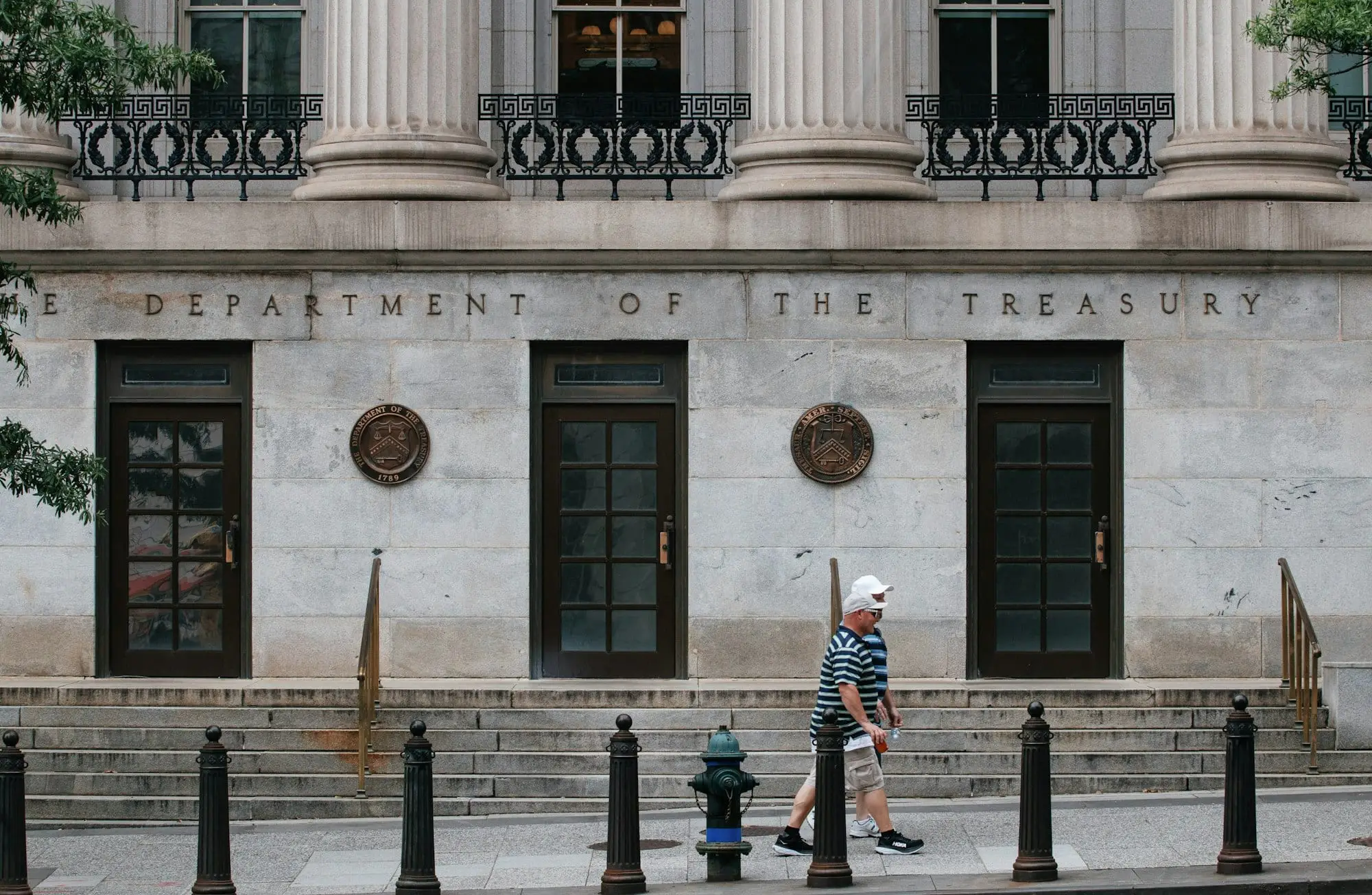
OFAC is the Office of Foreign Assets Control. It is part of the US Department of the Treasury. It publishes the SDN list.
OFAC's own definition, from its FAQ 18: the list covers individuals and companies owned or controlled by, or acting for, targeted countries. It also covers people and groups named under programs that are not tied to one country, such as terrorists and narcotics traffickers. OFAC calls these listed parties "Specially Designated Nationals," or SDNs.
Their assets are blocked and U.S. persons are generally prohibited from dealing with them.
What "blocked" means
Blocking means freezing. OFAC's FAQ 9 says blocking "immediately imposes an across-the-board prohibition against transfers or dealings of any kind" with the property. For a business, that means two things:
- You cannot pay a listed party, buy from them, sell to them, or sign a contract with them, unless OFAC has issued a license that covers it.
- If their money or property lands in your hands, you cannot send it back or pass it on. You hold it and report it.
OFAC's FAQ 9 says blocked property must be reported to OFAC within 10 business days.
Who is on it
OFAC's SDN list page says the SDN list names individuals, entities and groups, plus maritime vessels and aircraft blocked by OFAC. The Sanctions List Search tool filters results by four types: Individual, Entity, Vessel and Aircraft.
A single entry usually holds more than a name. Depending on the party, it can include:
- Aliases. OFAC's FAQ 10 says the names "and often aliases" of designated persons are added to the list.
- Addresses and identifiers. OFAC's FAQ 5 tells you to compare the full entry against details such as address, date of birth, nationality and ID numbers.
- Program tags. A short code after each entry.
Program tags
A program tag tells you which sanctions program put the party on the list. OFAC's program tag page says the codes "following each sanctions list entry indicate the sanctions program." One entry can carry several tags. Some examples from that page:
| Tag | Program |
|---|---|
| SDGT | Global Terrorism Sanctions Regulations, 31 CFR part 594 |
| IRAN | Iranian Transactions and Sanctions Regulations, 31 CFR part 560 |
| RUSSIA-EO14024 | Executive Order 14024 (Russia) |
| SDNTK | Foreign Narcotics Kingpin Sanctions Regulations, 31 CFR part 598 |
| CYBER2 | Executive Orders 13694 and 13757 (cyber) |
OFAC's search page tells users to "pay close attention to the program codes associated with each returned record." The tag matters because different programs can carry different rules and licenses.
Who has to care
OFAC's FAQ 11 says all US persons must comply with OFAC sanctions. That includes:
- US citizens and permanent residents, wherever they are in the world.
- Anyone inside the United States.
- Companies incorporated in the US, and their foreign branches.
Some programs also cover foreign subsidiaries owned or controlled by US companies. The exact definition of "U.S. person" sits in each program's regulations in 31 CFR chapter V.
If your business is a US company on QuickBooks Online or Xero, you are a US person. The list applies to every vendor you pay and every customer you invoice. For what OFAC expects from a business your size, see do small businesses need OFAC screening.
If your business is outside the US
Non-US businesses are not automatically clear. OFAC's FAQ 11 says "Non-U.S. persons are also subject to certain sanctions prohibitions." FAQ 3 gives two examples: causing or conspiring to cause a US person to violate sanctions, and conduct that evades US sanctions.
US dollar payments are the common route in. OFAC's Framework for OFAC Compliance Commitments says many non-US persons have violated OFAC's regulations by sending payments, "almost all of which have been denominated in U.S. Dollars," through US financial institutions for deals involving a sanctioned country, region or person. No US company needs to be part of the underlying deal. Routing the payment through a US bank can be enough.
Some programs also reach foreign persons who reexport certain US-origin goods, technology or services. If you are outside the US and unsure where you stand, ask a sanctions lawyer.
The 50 percent rule in plain words
A company can be blocked without appearing on the list.
OFAC's 50 Percent Rule says any entity owned 50 percent or more by one or more blocked persons is itself blocked. That holds whether the ownership is direct or indirect, and whether the entity is named on the list or not.
Ownership is added up across blocked owners. OFAC's FAQ 399 says the rule applies to entities owned 50 percent or more "in the aggregate by one or more blocked persons." Two examples:
- Blocked Person A owns 30 percent of Company X. Blocked Person B owns 25 percent. Together they own 55 percent, so Company X is blocked.
- Blocked Person A owns 40 percent of Company Y. Nobody else blocked owns any of it. Company Y is not blocked under the 50 Percent Rule.
The rule counts ownership through other companies too. FAQ 401 says "indirectly" means a blocked person owning shares through another entity or entities. If a blocked person owns all of Holding Co, and Holding Co owns 50 percent of your vendor, your vendor is blocked.
Control is a separate question
FAQ 398 says the 50 Percent Rule "speaks only to ownership and not to control." A company run by a blocked person, but not 50 percent owned by blocked persons, is not blocked under the rule. FAQ 400 says you cannot deal with a blocked person even when they act for a company that is not blocked. US persons may not, for example, sign contracts that are signed by a blocked individual.
For a small business, the practical point is this: a clean name search does not prove a vendor is clear. If a new vendor's ownership is unclear and the deal is large, ask who owns it.
How to search the list by hand
OFAC runs a free search tool called Sanctions List Search at sanctionssearch.ofac.treas.gov. It covers the SDN list and OFAC's other lists, called the Consolidated list. FAQ 369 says the List column on each result shows which list a match is on. For what the non-SDN lists cover, see OFAC sanctions lists explained.
What the score slider means
The Minimum Name Score slider controls how close a name has to be before the tool shows it. FAQ 247 says the slider defaults to 100, "which indicates an exact match." Lower scores show possible matches.
FAQ 249 says the score comes from two methods. Jaro-Winkler compares the letters. Soundex compares how the name sounds. The tool shows the higher of the two scores.
OFAC does not tell you which score to use. FAQ 250 says it "cannot make such a recommendation because each search has its own unique set of facts." You pick a threshold based on your own risk.
Why an exact-name search misses things
At a score of 100, FAQ 248 says the tool returns "only names that exactly match the characters entered." That is the wrong setting for most checks. A few reasons:
- Spelling variants. The same name can be spelled several ways. Names written in Arabic, Cyrillic or Chinese script often come out differently in English letters. OFAC's compliance framework lists failing to account for alternative spellings as a common screening fault. Its examples are Habana for Havana, Kuba for Cuba and Soudan for Sudan.
- Trading names. Your vendor record may hold a trading name that differs from the name on the list.
- Typing differences. A missing word, a "Ltd" versus "Limited," or a dropped accent can push the score below 100.
What to do with a possible match
OFAC's FAQ 5 sets out the steps. For the export-and-search routine in your accounting software, see how to screen QuickBooks vendors against the OFAC list or how to check Xero contacts against sanctions lists. Compare the full list entry with what you know about the party: address, date of birth, nationality, ID numbers. If few details line up, the hit is probably false. If several line up, treat it as a likely match. Do not pay, and get advice before you act. Block or reject as the rules require, and report to OFAC within 10 business days.
Keep a record of every search, even the clean ones. The record shows what you checked, when, and against which version of the list. OFAC's recordkeeping rule, 31 CFR 501.601, sets a 10-year retention period for records of transactions subject to its regulations.
How often the list changes
There is no schedule. OFAC's FAQ 20 says the SDN list is updated frequently, and names are added or removed as needed.
The OFAC Recent Actions page shows each change as it happens. Between 28 September and 9 October 2026, OFAC posted sanctions list updates on seven separate days. They covered counter terrorism, Iran, narcotics, transnational criminal organizations and other programs, plus removals.
Why a one-off check goes stale
A vendor you searched in January can be added in March. Your January search was correct on the day you ran it. It says nothing about the payment you make in April.
OFAC's compliance framework says a sanctions program should adjust "rapidly" to changes OFAC publishes, starting with updates to the SDN list.
For a small business, that means two habits:
- Check every new vendor and customer before the first payment or invoice.
- Re-check your existing vendor and customer lists on a regular cycle, and after any large batch of designations.
Doing this by hand means re-running every name each time. Sanctions Clear, opening to QuickBooks Online and Xero users, will check your vendors and customers against the OFAC lists, recheck them when they change or appear on a new bill, and log each result.
FAQ 467 says Sanctions List Search does not show names that have been removed. Your own dated record is the proof of what you checked.